
Open Twitter, LinkedIn, or any tech blog right now, and you’ll be hit with a barrage of buzzwords. TOPS, parameters, neural engines, LLMs. We are in the middle of a massive AI arms race, and hardware manufacturers are shouting from the rooftops about who has the biggest numbers.
But let’s pause for a second. Let’s cut through the marketing noise and look at this from the perspective of the people actually doing the work—the developers, the creators, the researchers. In this era of soaring computing power, what kind of AI engine do we really need on our desks?
The Cloud Illusion and the Local Reality
A year or two ago, the answer was simple: the cloud. We outsourced our heavy lifting to server farms. It was easy and accessible. But the honeymoon phase is ending. Between strict API rate limits, the nagging anxiety of uploading proprietary company code to third-party servers, and the slow bleed of monthly subscriptions, the industry consensus is rapidly shifting: We need to run AI locally.
Data privacy isn’t a luxury anymore; it’s a requirement. And having zero-latency access to your models is a game-changer for workflow.
The Problem: We Went Back in Time
So, how did the hardware market respond to this need for local AI? By handing us massive, cumbersome tower PCs.
To get the power required to run high-parameter models or render complex AI-generated scenes, we’ve been forced to regress. We are putting 40-pound metal monoliths under our desks again. They heat up the room like a furnace, suck down wattage, and sound like a jet taking off every time you run a batch process.
It feels like a paradox: we are using the most futuristic software ever created, but we are running it on hardware form factors from a decade ago. Is this really the best we can do?
The "Cold Thought": Raw Power Isn't Enough
Here is the cold, hard truth that often gets buried in the spec-sheet wars: Raw compute (TOPS) is only half the story.
If you’ve ever actually tried running a large language model locally, you know exactly where the real bottleneck is. It’s not always the processor; it’s the memory. Moving massive datasets between the CPU and a dedicated graphics card is where the magic stutters. You can have the fastest chip in the world, but if your memory bandwidth is narrow, it’s like putting a Ferrari engine in traffic gridlock. AI eats RAM and bandwidth for breakfast.
Furthermore, brute-forcing everything through a massive, power-hungry GPU isn't elegant. We need architectures that are actually designed for this—systems where the CPU, a powerful integrated GPU, and a dedicated NPU (Neural Processing Unit) work together seamlessly, sharing a massive pool of ultra-fast unified memory.
Redefining the Desktop AI Engine
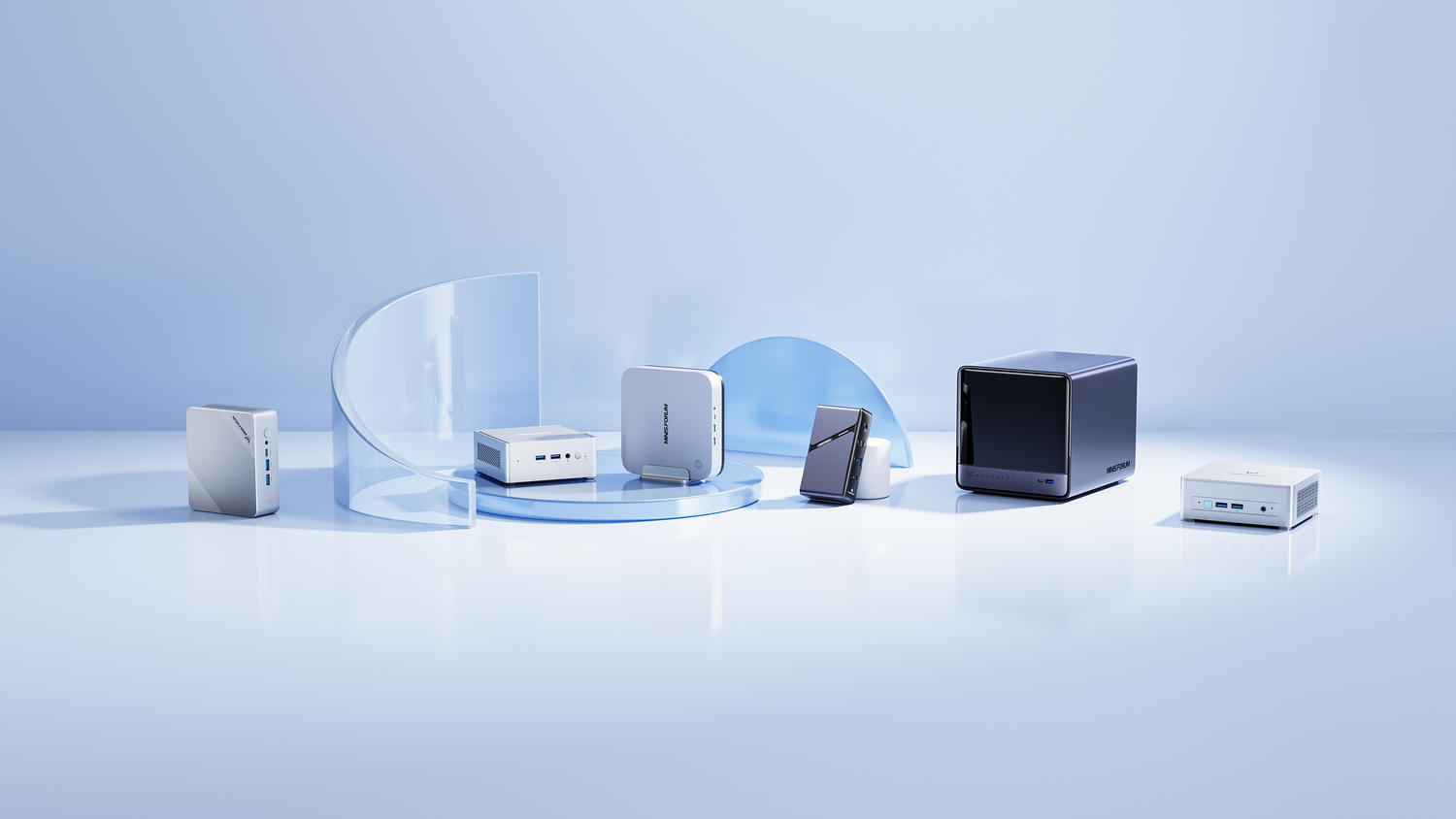
At Minisforum, we’ve been quietly watching this space, and we believe the industry is looking at the problem backward. You shouldn't have to sacrifice your workspace to get workstation performance.
A true modern AI engine should look different:
It shouldn’t hold your desk hostage: It should be elegant, compact, and unobtrusive. It should sit quietly on your desk, not dominate it.
It needs "Highway" Bandwidth, not just High Capacity: Having 32GB or 64GB of RAM is nice, but for real AI workloads, you need massive capacity (think 128GB) combined with insane transfer speeds. The wall between CPU and GPU memory needs to be torn down.
It requires surgical efficiency: Instead of brute-forcing power and generating massive heat, it needs dedicated AI hardware (NPUs) to handle background inferencing efficiently.
No compromises on I/O: It needs to plug into everything. Multiple 8K displays, lightning-fast network ports, and high-bandwidth expansion options.
The Future is Dense
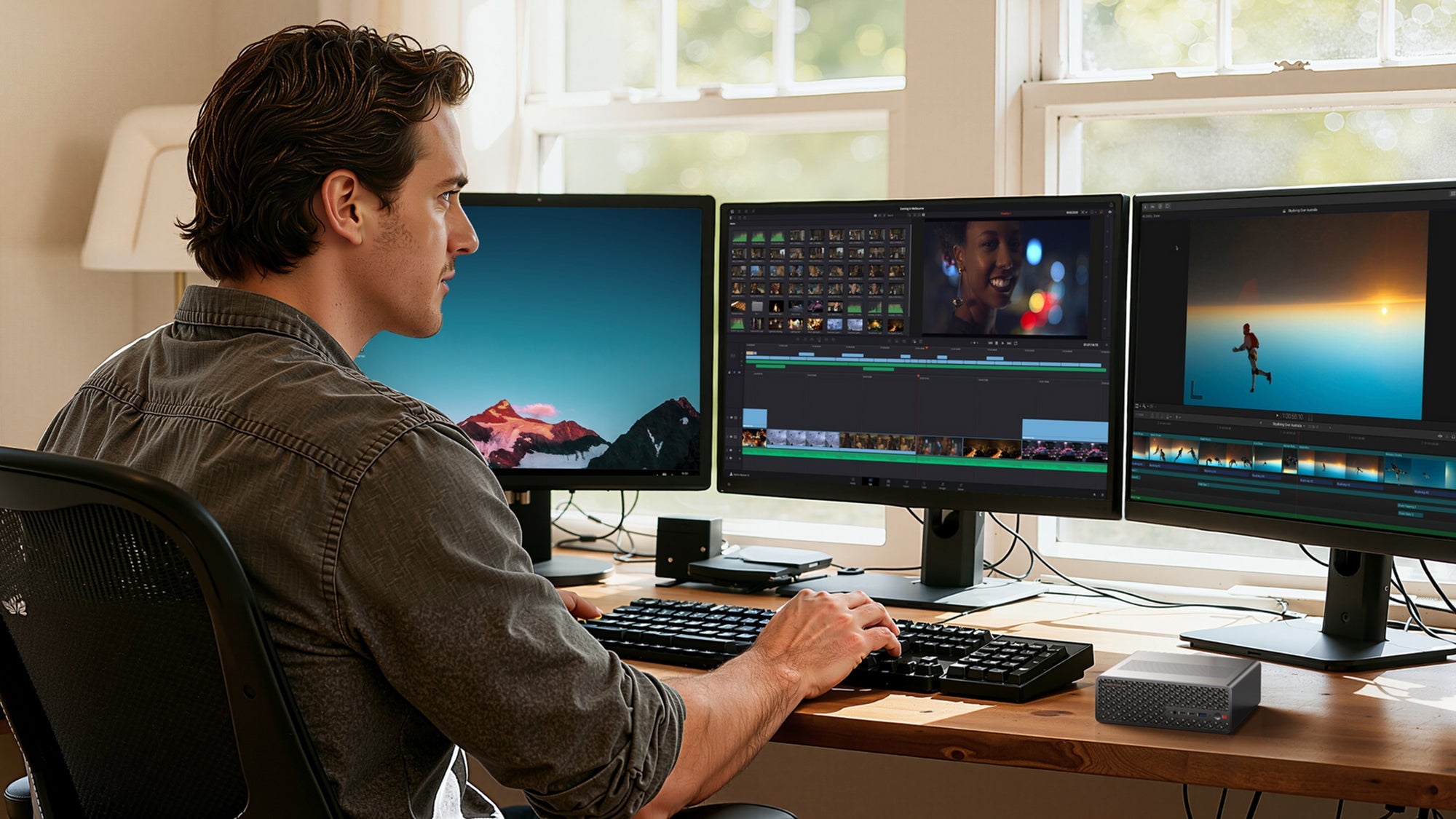
We are at a turning point. The future of AI development, 3D rendering, and creative workflows shouldn't be confined to server racks or giant, noisy towers.
The real hardware revolution won't just be about cramming more transistors onto a board. It will be about density. It will happen when true, uncompromising workstation-grade AI power becomes as compact, quiet, and beautiful as a hardcover book sitting gracefully next to your monitor.
That’s the kind of engine we actually need. And that’s exactly the future we are building.

Leave a comment
This site is protected by hCaptcha and the hCaptcha Privacy Policy and Terms of Service apply.